Showing posts with label Football Legends. Show all posts

Friday, March 13, 2009

Football Legends - Peter Schmeichel


DENMARK
1981-2003
Gladsaxe-Hero (1981-1984)
Hvidovre IF (1984-1987)
Brøndby (1987-1991)
Manchester United (1991-1999)
Sporting Portugal (1999-2001)
Aston Villa (2001-2002)
Manchester City (2002-2003)

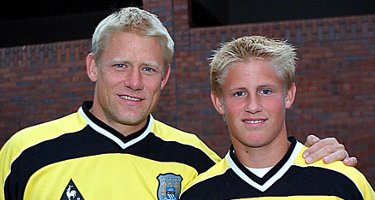
There has never been a better goalkeeper in the history of the Premiership than “The Great Dane.” Schmeichel had a pretty good career outside the Premiership, too, but it was his time at Manchester United where he became a legend. Schmeichel went to Old Trafford for the relatively paltry sum of £530,000, a price which Sir Alex Ferguson later teemed “The Bargain of the Century.” During his time in the Premiership, he kept clean sheets in 42% of his starts, the greatest ratio in league history. Schmeichel won 5 Premiership titles, 3 F.A. Cups, 1 League Cup, and, most notably, the 1998-1999 UEFA Champions League, where he served as skipper in place of suspended Roy Keane during the Finals and got to hold the trophy over his head on his last night as a United player. Schmeichel was voted UEFA Goalkeeper of the Year and World Goalkeeper of the Year in 1992 and 1993. He was recently voted “Greatest Goalkeeper of All-Time” in a Reuters poll, defeating the likes of Yashin and Banks.

Schmeichel had a successful international career as well. He remains the most-capped Danish player of all time with 129 appearances to his credit. He helped lead Denmark to the European Championship in 1992, and was the number one keeper for his country in the 1998 World Cup, where they fell to Brazil in the Quarterfinals.

Schmeichel wasn’t the nicest guy on the pitch. Indeed, the fiery keeper was accused of racism by Arsenal’s Ian Wright, and he was known for chewing out his own teammates for mistakes or errors. He was one of the few players to have survived a row with Sir Alex Ferguson, though. Evidently, the gaffer recognized his keeper’s worth and chose not to drive him away like he did with Keane, David Beckham, Ruud Van Nistelrooy, Jaap Stam, and others.

In any case, his shadow at Old Trafford remains so large that many quality goalkeepers have tried to replace him, and all have failed to measure up. Even Edwin Van der Sar, who has done well at United and has a chance to surpass the Great Dane in terms of trophies won, is always described as “the best goalkeeper since Schmeichel.” That’s a legend.

Football Legends - Dino Zoff


ITALY
1961-1983
Udinese (1961-1963)
Mantova (1963-1967)
Napoli (1967-1972)
Juventus (1972-1983)


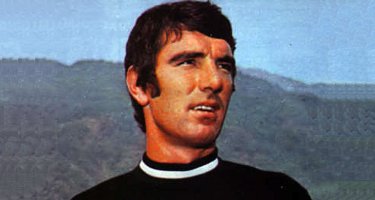
He was a winner with both club and country, and most pundits have ranked him among the top three goalkeepers of all time. He was one of the greatest keepers in Serie A history, winning six Scudetti, two Coppa Italia titles, and one UEFA Cup during his tenure at Juventus. He had to wait a bit before he could achieve success on the international level. He made one start for Italy during their run to the 1968 European Champions, picking up a win against Bulgaria in the Quarterfinals, and didn’t play at all during the 1970 World Cup. When he finally became the undisputed Number One, he immediately showed that it was a long-time coming. He didn’t concede an international goal for an astounding 1,142 minutes, a span that lasted from 1972 to 1974. He captained Italy to the 1982 World Cup and became the oldest man to ever hold the trophy.

He had outstanding instincts, lightning-quick reflexes, and was a great shot-stopper. He wasn’t all natural talent, however, as he also had an excellent sense of positioning. Unlike some of his counterparts, who played with fire and passion, Zoff was unflappable on the pitch, projecting a quiet, but strong confidence that was infectious. He rarely yelled at teammates, almost never humiliated them, and was revered for his sportsmanship. His leadership during the 1982 World Cup was widely praised as he held his team together amid stinging criticism from the press back home in Italy. After early setbacks, the Italian team came together and put together an impressive string of victories that included wins against the Maradona-led Argentinean squad, Brazil, Poland, and West Germany.

Dignified and cool under pressure, Zoff showed that you don’t have to have an outsized personality to be a successful goalkeeper.

Football Legends - Gordon Banks


ENGLAND
1955-1978
Chesterfield City (1955-1959)
Leicester City (1959-1966)
Stoke City (1966-1972)
Cleveland Stokers (1967)
St Patrick’s Athletics (1977)
Ft Lauderdale Strikers (1977-1978)

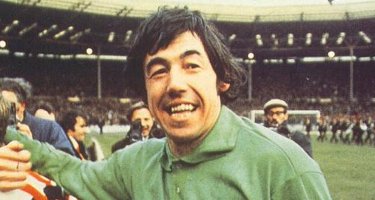
Perhaps the greatest English goalkeeper of all time, Banks will live, forever, in English football lore for his time as England’s number 1 goalkeeper during the 1966 and 1970 World Cups. In 1966, Banks was virtually impenetrable, keeping four straight clean sheets before being beaten on a penalty kick from Portuguese legend, Eusebio. Banks conceded two goals in the final against West Germany, the first as a result of miscommunication with defender Jack Charlton, and the other on a deflected free kick, but was instrumental in shutting the door on West Germany during extra time, turning away a shot from Siggy Held that would have equalized the match after England had gone ahead.

In 1970, Banks would add to his legend, turning away a shot from Pele that’s been called the greatest save in football history. During their group-stage match, Brazil and England were deadlocked at 0-0 when Jairzinho beat his defender down the right wing and sent a long cross towards the far post where Pele waited. All Pele needed to do was get his head on the ball and he would, seemingly, have the easiest goal of his career. Surely, Banks, who had been guarding the near post and, as a result, was way out of position following Jairzinho’s cross, was easily beaten and wouldn’t have gotten to the shot unless he had bionic arms. So confident was Pele that his header was going in that he turned away and shouted “Goal!” as soon as he made contact. Banks, however, leap across his line with superhuman effort and managed to get enough of a touch to send it out for a corner. Pele was dumbfounded and later described that save as the best he had ever seen. England eventually lost to Brazil, but managed to advance to the Quarterfinals, where they lost to West Germany. Banks proved his value to the team, as he fell violently ill before the match and had to miss out. His understudy was breached 3 times and England’s title defense was over.

On the club level, Banks played extremely well for Leicester and Stoke, although the silverware was much harder to come by. He won the 1964 League Cup with Leicester, but memorably lost in the F.A. Cup Final to Manchester United in 1963, the latter playing in its first trophy since the Munich Air Disaster. Banks’ career was cut short after he was injured in a car accident that left him blind in one eye. He recovered enough to play for the NASL, but was never the same.

Football Legends - Lev Yashin


RUSSIA
1949-1971
Dynamo Moscow

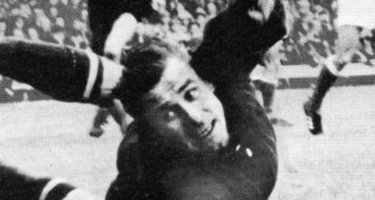
He spent his entire career behind the Iron Curtain, but anyone who knew anything about football knew about Lev Yashin. Nicknamed “The Black Spider” because of his intimidating all-black kit and because he, seemingly, had eight arms due to all the breathtaking saves he made on a routine basis, Yashin was universally regarded as the best goalkeeper in the world by his peers. Yashin led the Soviet Union to three straight World Cups, carrying his team to the Quarterfinals in 1958 and 1962. He also led the Soviet Union to the Olympic gold medal in 1956 and the European Championship in 1960. He won the Ballon d’Or in 1963, becoming the only goalkeeper ever to win that prestigious honor. His dominance was such that he finished first or second in almost every single meaningful poll to determine the greatest goalkeeper of all time.

He was respected for his leadership abilities on the pitch and often acted as a de facto skipper, even though he never actually donned the armband. Yashin also changed the way goalkeepers played the game. Until Yashin, it was unheard of for a keeper to punch the ball away instead of try to catch it. Yashin was also one of the first to utilize the quick throw in order to ignite counterattacks, and frequently ventured out of the penalty area. We may take these things for granted nowadays, but these tactics were novel concepts when Yashin brought them to the game.

He was one of the greatest shot stoppers of all time, reputedly stopping over 150 penalty shots. His training regimen was unique, as well. He admitted to smoking before a match as a way of calming his nerves, and then drinking to loosen up his muscles. Clearly, a number of athletes from all sports can give him credit for that innovation.

Tuesday, March 3, 2009

Football Legends - Roberto Baggio


ITALY
1982-2004
Vicenza (1982-1985)
Fiorentina (1985-1990)
Juventus (1990-1995)
AC Milan (1995-1997)
Bologna (1997-1998)
Inter Milan (1998-2000)
Brescia (2000-2004)

One of the most popular Italian players to play the game, Baggio more than lived up to the adoration and adulation of the fans. With his good looks and charisma, he became a bonafide superstar and ranks as possibly the most famous Italian player of all time. He wasn’t just flash, though, as he averaged nearly a goal every two matches despite playing his entire career in defensive-minded Italy, and he scored 27 times in 56 appearances for the Italian national team. Even his playing style was attractive, as he became known for his dazzling runs into the box, his ability to elude defenders, and his skill at flicking passes or shots with either foot.

Baggio won Serie A titles with both Juventus and AC Milan. He also won a Coppa Italia while with Juventus, and added a UEFA Cup title to his haul in 1995. Baggio won the Ballon d’Or and the FIFA World Player of the Year Award in 1993, after leading Juventus to the UEFA Cup and scoring 30 goals in all competitions. In 2002, he was named to FIFA’s All-Time Dream Team, alongside players like Pele, Maradona, Beckenbauer, Cruijff, and Platini.

Obviously, he is most famous (or infamous) for missing a penalty kick during the shootout in the 1994 World Cup Final against Brazil. While his miss didn’t cost the Italians the match, as Brazil were ahead and would have won if they had converted their next kick, his miss clinched the title for Brazil. The miss overshadowed what had been a great tournament for him, as he named to the World Cup Starting XI and his 5 goals were tied for second-most among all players. He also played well in 1990, scoring the “Goal of the Tournament” against Czechoslovakia, and in 1998, when he became the first Italian player to score in three World Cups.

He accomplished so much and he was such a special player that it’s a shame that many people only know about his penalty miss in 1994.

Football Legends - Gerd Müller


GERMANY
1963-1981
TSV 1861 Nördlingen (1963-1964)
Bayern Munich (1964-1979)
Fort Lauderdale Strikers (1979-1981)

The phrase “Goal Machine” gets thrown around a lot. Müller, however, more than lived up to his reputation as a goal scorer, finding the net an astonishing 365 times in 427 Bundesliga matches, and 68 times in 62 international appearances. Müller wasn’t very tall (5’9’’), wasn’t very fast, and had short stubby legs that made him look like the last person capable of scoring on the pitch. However, his short, powerful legs allowed him to accelerate past defenders with ease, stay on his feet even after being tackled by defenders, and gave him a surprising amount of leverage in winning headers.

Known as “Bomber der Nation” (the nation’s bomber), Müller, along with Sepp Maier and Franz Beckenbauer, was part of the great Bayern Munich teams of the 70’s. He won four Bundelisga titles, four German Cups, one Cup Winners’ Cup, and three consecutive European Cups from 1974-1976. He led the Bundesliga in scoring seven times and won the Golden Boot twice. He still holds the Bundesliga’s single-season scoring record with 40 goals in 1971-1972, and his 66 goals in 72 European Cup matches is still a record. He is, by far, the all-time leading scorer in Bundesliga history, having scored nearly 100 more goals than the person in second place.

His success continued to the international stage, as he was part of the Golden Generation of West German football. He was part of the 1972 European Championship squad and provided the goal scoring that led West Germany to the 1974 World Cup. Playing in his final international match, Müller scored the game-winning goal in the Final against the Netherlands. He finished his World Cup career with 14 goals, a record that stood until Ronaldo passed it in 2006.

He has continued his involvement with Bayern Munich, coaching the reserve team. Unlike his fellow German icons, Maier and Beckenbauer, he has kept a low profile following his retirement, choosing not to voice his opinion on controversial matters relating to German football. Despite his low-key approach, Müller remains one of the most beloved and respected players of all time.

Football Legends - Ferenc Puskás


HUNGARY
1943-1966
Kispest A.C. (1943-1949)
Honved (1949-1955)
Espanyol (guest 1957)
Real Madrid (1958-1966)

Like his celebrated teammate at Real Madrid, Alfredo Di Stefano, Puskás was a goal machine who became a naturalized Spanish citizen. Like Di Stefano, Puskás had an enviable goal-to-games ratio, netting 187 goals in 177 league appearances for Kispest A.C., 165 goals in 164 league appearances for Honved, and 157 goals in 182 league appearances for Real Madrid. Throw in his 84 goals in 85 appearances for Hungary, and Puskás was unquestionably one of the most efficient scorers of all time.

He was a deadly left-footed shooter who could set up goals just as well as he could score them. He certainly didn’t look the part of a goal scorer, being short, stocky, and unable to shoot with his right foot. However, he was regarded as one of the greatest outside shooters of all time, and, well, the stats speak for themselves.

He was part of the “Mighty Magyars,” a talent-laden Hungarian National Team that was favored to win the World Cup in 1954. Puskás did his part in the group stage, scoring three goals in the first two matches before getting injured. He didn’t return until the Finals, and was hobbled and out of form as West Germany (who had lost to Hungary by a score of 8-3 in the group stage) upset them. Despite his injury, he scored the first of Hungary’s two goals, and he thought he scored the equalizer until he was controversially ruled off-side. He suited up for Spain in the 1962 World Cup, but failed to score any goals.

Puskás was on tour in Spain with Honved when the Revolution of 1956 broke out in Hungary. Puskás decided to defect to Spain, and the ensuing controversy over his immigration status found him banned from football for two years. He played in a few unofficial matches for Espanyol before signing with Real Madrid. There, he teamed with fellow immigrant Alfredo Di Stefano to give the club a dominant strike force. Their dominance was on display during the 1960 European Cup Final, when Real Madrid defeated Eintracht Frankfurt by a score of 7-3, with Puskás scoring four goals and Di Stefano adding three. Puskás won five La Liga crowns and was a member of the team for three out of Real Madrid’s five consecutive European Cups. He also won five Hungarian League crowns and was named FIFA World Player of the Year twice.

Despite his defection, Puskás remains revered in Hungary. He was named the country’s greatest player of the last 50 years, and the Puskás Ferenc Stadion in Budapest was named in his honor.

Football Legends - Pele


BRAZIL
1956-1977
Santos (1956-1974)
New York Cosmos (1975-1977)

There are legends, there are icons, and then there’s Pele. Without question, Pele is the greatest player of all time, someone whose talent transcended the game. If you don’t know anything else about football, you know that Pele was the best. Much like how Jimi Hendrix is considered to be greatest guitarist that ever lived and Michael Jordan is the greatest basketball player of all time, Pele is the greatest footballer ever to walk the planet. Some people might come up with contrarian arguments, just to be different. They might say that Maradona was better, just like how some people claim that Clapton was better than Hendrix or that Oscar Robertson was better than Jordan.

Don’t buy it.

Pele scored 1,281 goals, a number made all the more remarkable since these are just the ones recognized by FIFA. By contrast, Romario claimed to have scored 1,000 goals, however some of them came during his days with the youth team and others were in unsanctioned events. He scored 77 goals in 92 appearances for Brazil, and scored 589 domestic goals in 605 appearances. When he came out of retirement to play for the Cosmos, he managed to bag 31 goals in 56 games while doing something that David Beckham couldn’t do, namely, turning the Cosmos into an American phenomenon.

He revolutionized the forward position, blending his playmaking skills with his deadly shot to become the ultimate weapon. He was a great dribbler and passer, and was blessed with blistering pace and exception aerial skills. He made the number 10 shirt synonymous with his playmaking abilities, and as a result, he turned what had been a random shirt assignment into a coveted number usually reserved for a team’s best player. Whenever teams say that they’re looking for a “number 10,” they’re really referring to Pele.

He was a part of four World Cup squads, winning three of them. He won 25 trophies while playing with Santos, and added to his cabinet with an NASL Title while with the Cosmos. He has a whole slew of individual and lifetime achievement awards, which are too many to name. Suffice it to say that it’s a bigger story when Pele doesn’t win an award than when he does.

He is a national icon, a global ambassador for the game, and a philanthropist who has used his fame to help those less fortunate than he is. Based on his playing statistics alone, he would be the greatest player of all time. However, his off-the-field activities make him a true legend, and an icon that everyone can embrace.

Football Legends - Marco van Basten


NETHERLANDS
1982-1993
Ajax Amsterdam (1982-1987)
AC Milan (1987-1993)

His career was cut short by injuries, but what a career it was! Van Basten had an incredible goals-to-games ratio for both club and country. He found the net 218 times in 280 league appearances in both the Netherlands and Italy, and he scored 24 times in 58 appearances for the national team. In all, he scored 301 goals in 428 total appearances for club and country.

His main attribute was his strength on the ball, which allowed him to score in crowded areas. Indeed, he was so big and strong that he seemed to invite hard challenges from defenders, leading to his career-ending injury. Despite his size and strength, he was extremely agile and skilled, capable of scoring off bicycle kicks and overhead kicks. He was also known for his thunderous shot, which allowed him to score from distance as well.

He won three Eredivisie titles, three Dutch Cups, and one UEFA Cup during his time at Ajax, and added three Serie A titles, three Italian Supercups, and back-to-back European Cups (1988 and 1989). Along the way, he racked up a slew of individual honors, including the Golden Boot for the 1985-1986 season when he scored 37 goals in 26 league appearances for Ajax. He won the Ballon d’Or three times (1988, 1989, 1992), World Soccer Player of the Year twice (1988, 1992), FIFA World Player of the Year once (1992), and UEFA Player of the Year three times (1989, 1990, 1992). More amazingly, he led the Eredivisie in scoring every single season he played at Ajax, except for his rookie season, and was the top scorer in Serie A twice (1989-1990, 1991-1992).

He won Euro 88, scoring 5 goals, including a hat trick against England and their legendary goalkeeper Peter Shilton in the group stage. He also led the Netherlands to the semi-finals of Euro 1992, where they lost to Denmark in a shootout. Van Basten only played in one World Cup, which was in 1990. His Netherlands team lost to eventual champions West Germany in the Round of 16.

Van Basten eventually retired because of a serious ankle injury. His career may have been cut short, but his brilliance was unquestionable.

Football Legends - Zinedine Zidane


FRANCE
1988-2006
AS Cannes (1988-1992)
Bordeaux (1992-1996)
Juventus (1996-2001)
Real Madrid (2001-2006)

When people ask me who the greatest player of the last 10 years was, I say, without any hesitation at all, Zinedine Zidane. Of course, people then come back with “Oh, the guy who committed the headbutt in the World Cup Final?” Yeah, Zidane was a hothead, and he ended his career on the worst possible note imaginable. However, it doesn’t diminish his brilliance, nor does it detract from his accomplishments.

Zidane was, arguably, the best playmaking international midfielder since Maradona. He was the heartbeat of the French National Team that dominated from 1998-2000, winning both the World Cup and the European Championship. If there were any doubt about how important he was to his country, look no further than the 2002 World Cup, where an injured Zidane watched the first two French matches from the bench and hobbled onto the field for the third and was unable to prevent France from being eliminated without scoring a single goal. Additionally, France’s struggles in qualifying for the 2006 World Cup without Zidane, and their poor display at Euro 2008 only underscored how reliant the team had become on his brilliant playmaking.

He wasn’t just a playmaker, though, and he was more than capable of putting the ball in the net on his own. He was a great free-kicker and was one of the best headers in the game. He had exquisite ball control skills and was great at keeping possession of the ball, especially when going forward. He had a ferocious shot, and he could finish from long-range or up close.

On the club level, Zidane was just as great as he was on the international scene. He won two Scudetti with Juventus and he won the Champions League and La Liga with Real Madrid. Additionally, he won the Ballon d’Or in 1998 and was a three-time FIFA World Player of the Year. With Kaka’s proposed transfer to Manchester City falling through the cracks, Zidane remains the most expensive player of all time, transferring to Real Madrid from Juventus for £46 million.

His temper, obviously, cost him dearly, and his sending off in the World Cup Final was hardly the first time he saw red during his career (both literally and figuratively). He was sent off 14 times during his career, including an ugly incident in the 1998 World Cup where he stomped on a Saudi Arabian player’s chest. His two-match ban got him back in time for the Quarter Finals, though, but it cost him a chance at the Golden Ball. Plus, there was the embarrassing scene in 2006, where he finally did win the Golden Ball, but was sent off in the World Cup Final after headbutting Marco Materazzi. Still, just because he didn’t have a fairy tale ending, it doesn’t make him any less of a legend.

Football Legends - Johan Cruijff


NETHERLANDS
1964-1984
Ajax (1964-1973, 1981-1983)
Barcelona (1973-1978)
Los Angeles Aztecs (1979-1980)
Washington Diplomats (1980-1981)
Levante (1981)
Feyenoord (1983-1984)

Known as “Pythagoras in Boots” because of his mastery of passing angles, Cruijff was instrumental to the Dutch philosophy of “Total Football.” As such, Cruijff’s position can be difficult to ascertain, since he could score, pass, and defend, and moved all over the pitch, depending on where he was needed. However, his passing and scoring skills made him most effective as an attacking midfielder.

He was a great scorer, as evidenced by his 267 goals in 366 appearance for Ajax. In all, he scored over 400 goals during his career for club and country. As mentioned earlier, he was a tremendous passer, able to see the field unlike most of his peers and deliver accurate passes from anywhere on the pitch. He could dazzle too, as he perfected the “Cruijff Turn” in which he faked a pass or cross, forcing a defender to commit to it, only to drag the ball behind his planted foot and turning away from the flat-footed defender.

At Ajax, he was the leader of one of the greatest teams of all time. He won the treble in 1972, and nearly repeated the task the following season. In all, he won eight Eredivisie titles, five KNVB Cups, and three consecutive European Cups from 1971-1973. He added a Liga title while with Barcelona to his trophy cabinet, and won a Eredivisie title with Feyenoord. He also racked up the individual honors, taking home the Ballon d’Or in 1971, 1973, and 1974.

Despite playing on some extremely talented international teams, Cruijff was never able to win the World Cup. Their best chance to win came in 1974, when Cruijff (who won the Golden Ball that year as the Best Player in the World Cup) led the Netherlands to the World Cup Final against West Germany. The Dutch had sailed through their previous matches, with Cruijff scoring three goals. He set up the opening goal against West Germany in the Finals, drawing a foul inside the box that resulted in a penalty during the 2nd minute of the match. West Germany, however, did a great job man-marking Cryuff, shutting him down with the likes of Franz Beckenbauer, Berti Vogts, and others.

After retiring, Cruijff became a successful manager, winning two KNVB Cups and a Cup Winners’ Cup with Ajax and four consecutive La Liga crowns while with Barcelona. Despite his often stormy relationship with Ajax (he left for bitter rivals, Feyenoord after a salary dispute and was supposed to join the club as technical director until it fell through at the last minute), he remains a club icon whose number 14 jersey was retired.

Football Legends - George Best


N. IRELAND
1963-1984
Manchester United (1963-1974)
Dunstable Town (loan, 1974)
Stockport County (1975)
Cork Celtic (1975-1976)
Los Angeles Aztecs (1976, 1977-1978, 1978-1979)
Fulham (1976-1977)
Fort Lauderdale Strikers (1978-1979)
Hibernian (1979-1980)
San Jose Earthquakes (1980-1981)
Bournemouth (1983)
Brisbane Lions (1983)
Tobermore United (1984)


With a name like “Best” you had better be able to live up it. George Best did so, and more, during his long career. He was one of the greatest wingers of all time, as his fleet-footed pace and acceleration allowed him to blow by defenders, while his trickery with the ball won him fans and admirers all throughout the world. He was a deadly goal-scorer, putting up an astonishing 138 goals in 361 appearances for Manchester United, and finishing with 204 in his career for both club and country.

His best years were at Old Trafford, where he was surrounded by talented players such as Bobby Charlton and Denis Law. It could have been an even more impressive array of players, as the Munich Air Disaster had occurred five years before Best debuted with the senior team. Best was seen as the replacement for the gifted Duncan Edwards, who had perished in the crash, and Best soon set about making his own legend at Old Trafford. He won two League titles in 1966 and 1967, and in 1968, he had a dream season, winning a European Cup title and being voted European Player of the Year and Football Writers’ Association Footballer of the Year. In the semi-finals of the European Cup that year, United were in danger of going out against Real Madrid, but Best sent a brilliant side-pass to Bill Foulkes after seeing Real Madrid’s defense and realizing that a conventional cross into the box would have been cut out. Foulkes then scored the goal that put United in the Finals, where Best scored the Cup clinching goal against a Benfica team that was led by Portuguese legend, Eusebio.

Despite his brilliance on the pitch, he was never able to lead Northern Ireland to the World Cup. That didn’t diminish his stature in his home country. Neither did his rapid physical decline as a result of decades of hard-living that turned him into a tabloid laughing stock later in his life. In Northern Ireland, they have a saying there that goes: “Maradona: Good. Pele: Better. George Best.” That about sums it up.

Football Legends - Bobby Charlton


ENGLAND
1953-1975
Manchester United (1953-1973)
Preston North End (1973-1974)
Waterford United (1975)

One of the true legends of the game, Sir Bobby Charlton has been blessed with good fortune for his entire life. One of the only players who survived the Munich Air Disaster, Charlton carried the torch for his fallen comrades while providing a bridge to the new group of United players that took the team to success in the mid-60’s.

Charlton was known for his ferocious long-range shot and attacking skills in midfield, and his 249 goals for United remain a club record. He held the record for most club appearances until last season, when Ryan Giggs surpassed him. He was also the most-capped player for England at the time of his retirement, earning 106 caps for his country, and his goalscoring record for England still stands at 49 goals.

Charlton was a winner who experienced tremendous success on the pitch. He won League titles in 1957, 1965, and 1967, and an F.A. Cup title in 1963. He also captained United to its European Cup victory in 1968, and won both the Football Writers’ Association Footballer of the Year award and the Ballon d’Or in 1966.

He was a vital part of the English National Team, and scored both English goals in a 2-1 victory over Eusebio and the Portuguese team in the 1966 Semi-Finals. So dangerous was he, that, in the Finals, West Germany assigned their talismanic sweeper, Franz Beckenbauer, to mark him. Beckenbauer did the job, however Charlton showed his defensive skills and neutralized “Der Kaiser” on the other side of the ball.

Charlton has continued his service to the game, even in retirement. As Manchester United’s goodwill ambassador, his stature within the club has only increased with time. He has also served as an ambassador for English football, helping to promote England’s bids for the 2006 World Cup and the 2012 Olympics.

Bobby Charlton’s life was not snuffed out on that fateful day in Munich, and he has made the most of his second chance, continuing to contribute to the game while commemorating his fallen teammates.

Football Legends - Paolo Maldini


ITALY
1984-present
A.C. Milan

Like his mentor, the great Franco Baresi (see above), Maldini is an AC Milan legend who has played his entire career at the San Siro. Maldini has followed in Baresi’s footsteps in a number of other ways as well. He’s been club skipper, he’s been an inspirational and iconic figure, and most importantly, he’s been a winner. Maldini has won more games than anyone in an A.C. Milan kit, and has a crowded trophy room to boot. He has won seven Scudetti, one Coppa Italia, four Italian Super Cups, and five UEFA Champions League Titles. He was also the first European-based captain to lift the World Club Championship,. In 1994, he became the first defender to win World Soccer’s World Player of the Year award.

He is extremely versatile and has excelled at both left-back and center back during his career. He moved to center back after Baresi retired and has played much of his career for club and country in the heart of the defense. Indeed, the heart metaphor is apt when describing Maldini since he was always the inspirational leader of his team’s backline. He didn’t just use words and emotions to get the job done, though. He also led by example, and his exquisite skills, solid tackling, and guile made him, arguably, the greatest defender in the world during his day. He wasn’t as flashy as his counterpart, Roberto Carlos (see below), but most experts will tell you that he was a much better defender.

Internationally, he remains Italy’s most capped player with 126 appearances. He was skipper for 74 of those appearances, which is also a record. He didn’t win any trophies during his time with the national team, coming closest in 1994 when he was on the Italian squad that finished second to Brazil. He was also a runner-up at Euro 2000, where he came up short against France. Nevertheless, he is one of the most beloved players in Italian history and a true icon.

Football Legends - Franco Baresi


Franco Baresi

ITALY
1977-1997
AC Milan

Like Beckenbauer, Baresi played the libero role to perfection during his two decades at Milan. Unlike Beckenbauer, Baresi concentrated more on his defensive duties, holding down the middle of field and easily dispossessing anyone who dared enter the penalty area while he was standing guard. That’s not to say he didn’t go forward, because he did. However, his primary role was to protect his keeper and win the ball, which he did with amazing success.

Baresi had a phenomenally successful career with Milan, winning six Scudetti, three European Cups, and four Italian Supercups. As an international player, he was on the 1982 World Cup winning squad, but at 22 years old, he was an unused substitute behind Italian great Gaetano Scirea (see above), albeit one that left with a Winner’s Medal. He missed the 1986 World Cup, and didn’t make his debut until 1990, when Italy hosted the tournament. With high expectations, Italy came up short, losing to Argentina in the Semi-Finals, but were able to finish third after defeating England in the consolation match. He was the skipper for the 1994 team that lost to Brazil in the Finals, and was one of the players who missed in the penalty shootout, although he did not face nearly as much criticism as his teammate, Roberto Baggio, whose miss clinched the Cup for Brazil. Throughout his career, Baresi earned 81 caps, a number that would have surely been in the triple-digits if he hadn’t been competing with Scirea.

Ultimately, his greatest influence can be seen through his protégé, Paolo Maldini. Baresi spent a lot of time tutoring his younger charge while the two of them played together at Milan. As such, when Baresi retired, he turned over his captain’s armband to Maldini in a memorable moment involving the clubs current and future icons. Only Maldini has won more matches, made more appearances, and won more trophies with the club than Baresi.

Football Legends - Franz Beckenbauer


GERMANY
1964-1983
Bayern Munich (1964-1977)
New York Cosmos (1977-1980, 1983)
Hamburger SV (1980-1982)

“Der Kaiser” is generally regarded as the greatest German footballer of all time, and with good reason. No one was better at winning trophies than Beckenbauer. He became the driving force of some of the greatest teams in football history while playing with Bayern Munich, combining with Sepp Maier and Gerd Muller to win four Bundesliga crowns, four DFB Cups, one Cup Winners Cup, and, most notably, three straight European Cups from 1973-1976. His winning ways continued after he left Bayern Munich, winning a Bundesliga title with Hamburger in 1982, and winning three NASL Championships with the Cosmos.

As successful as he was in domestic competition, he was even better on the international scene. Beckenbauer captained the West German side to the 1972 European Championships and the 1974 World Cup. During the 1974 World Cup Final, he had, arguably, his finest moment, as his West Germans were big underdogs against the Johan Cruijff and the “Total Football” Dutch juggernaut. However Beckenbauer, Berti Vogts, and other German defenders man-marked Cruijff so well that the Netherlands managed only one goal on a penalty shot.

Beckenbauer wasn’t just a winner. He was a pioneer that changed the way the game was played. Not content to sit back and concentrate on defense when he had great playmaking and attacking skills, or to stay in midfield when he had such excellent defensive instincts, he became the first great sweeper (“libero”) in the game.

Beckenbauer remains a dominant figure in German football. He won the 1990 World Cup as a manager, guiding the very last West German squad to glory. He also won a Bundesliga title as Bayern Munich’s manager, and picked up a UEFA Cup title to boot. He’s currently the Chairman of Bayern Munich, as well as the Vice-President of the DFB. He was instrumental in bringing the World Cup to Germany in 2006, and frequently makes headlines for criticizing various German players and managers. Hey, when you’ve won as much as he has, I guess you’ve earned that right.

Most notably, Beckenbauer’s success as a libero, prompted many teams to look for their own version of “Der Kaiser.” Some teams, like Italy with Scirea and Baresi or the later-day German squad with Matthaus succeeded. But, by and large, most teams found out that there was only one Beckenbauer.

Football Legends - Ricardo Zamora


SPAIN

Espanyol (1916-1919, 1922-1930)
Barcelona (1919-1922)
Real Madrid (1930-1936)
OGC Nice (1936-1938)

With his matinee idol good looks (Marca once referred to him being “as famous as Garbo, and better looking”) and Beckham-esque sense of style (he wore a cloth cap and a white polo-neck jumper, which he claimed protected him from the sun and from opposing players, to say nothing of the Fashion Police), “El Divino” is considered to be the first football superstar in Spanish history. He won five Copa Del Rey championships, five Catalan Club Championships (which existed before La Liga), and two La Liga titles. He wasn’t all style over substance, though. He was known for his toughness and bravery, frequently playing despite severe injuries. He is, perhaps, most famous for playing with a broken sternum against England, a match in which Spain became the first team from outside the British Isles to defeat England.

He was a member of the very first Spanish international squad and won a silver medal at the 1920 Olympics. He was also the starting goalkeeper for the Spanish side that went all the way to the Quarterfinals in the 1934 World Cup. He was Spain’s most capped player for 38 years before being surpassed by José Ángel Iribar.

He was every bit as controversial as he was accomplished. Like Lev Yashin (see below), he enjoyed drinking and smoking, and was known to smoke up to three packs of cigarettes a day (good thing he didn’t play in the midfield). He was sent off in the 1920 Olympics for punching an Italian player, and was arrested on his way home from the Olympic games for trying to smuggle Cuban cigars into Spain. He tried to conceal part of his signing-on fee with Espanyol so that he wouldn’t have to pay taxes on it, and was suspended for a year.

Politically, he was one of the rare Spanish players of that era who found favor with both Nationalists and Republicans. He played for the Catalan National Team, but controversially transferred to Real Madrid, which was the preferred side of Francisco Franco, the Generalissimo who tried to suppress Catalan Nationalism upon becoming dictator of Spain. He was given a medal by the Republican government, which obviously didn’t take because he was later captured by the Republican Army during the Spanish Civil War, and was rumored to have been killed. He managed to escape to France, where he played his last two years with OGC Nice before returning to Spain, where he received a medal from Franco.

Despite his shifting political allegiances, he is still revered in Spanish football. The award for outstanding goalkeeper in La Liga is named the Ricardo Zamora Trophy.

Football Legends

The words “legend” and “legendary” are quickly becoming two of the most overused words in the English language. In fact, fans of “How I Met Your Mother” will know that it’s actually become a catch-phrase. The fact that Barney Stinson (played wonderfully by TV legend - and I mean that sincerely - Neil Patrick Harris) uses the word “legendary” in every single episode illustrates just how trite the word has become. Designating someone as a legend or describing them as legendary should really be reserved to special situations. After all, the definition of “legend” is “a person or thing that inspires a story coming down from the past.” No one writes tales about the moderately mediocre, the above average, or even the very good. You want to save your stories for the very best of the best, and the same holds true in football.

In football, legends aren’t just good players or managers. Legends aren’t even great players or managers. Legends are in a class by themselves. They represent the very best of the sport. They’re the ones that you hold up as examples of what kind of player or manager that you want to be. They’re the ones that you tell your children about when they’re growing up. They’re the ones that you study and observe once you decide to become a player or manager yourself. In many cases, they’re the ones that fill you up with feelings of national pride and patriotism. Great players and managers are a dime a dozen, but legends are few and far between.

This feature is supposed to be informative. It’s not a ranking of the greatest players of all time. Nor is it even my opinion as to who are the best players at their respective positions. Rather, this feature looks at players who are considered to be legends, either by soccer experts or by fellow players. So, before anyone gets upset because I omitted someone, or because you’re convinced that [X] was better than the players who are on the list, please keep in mind that these are not rankings.